

Single Blog
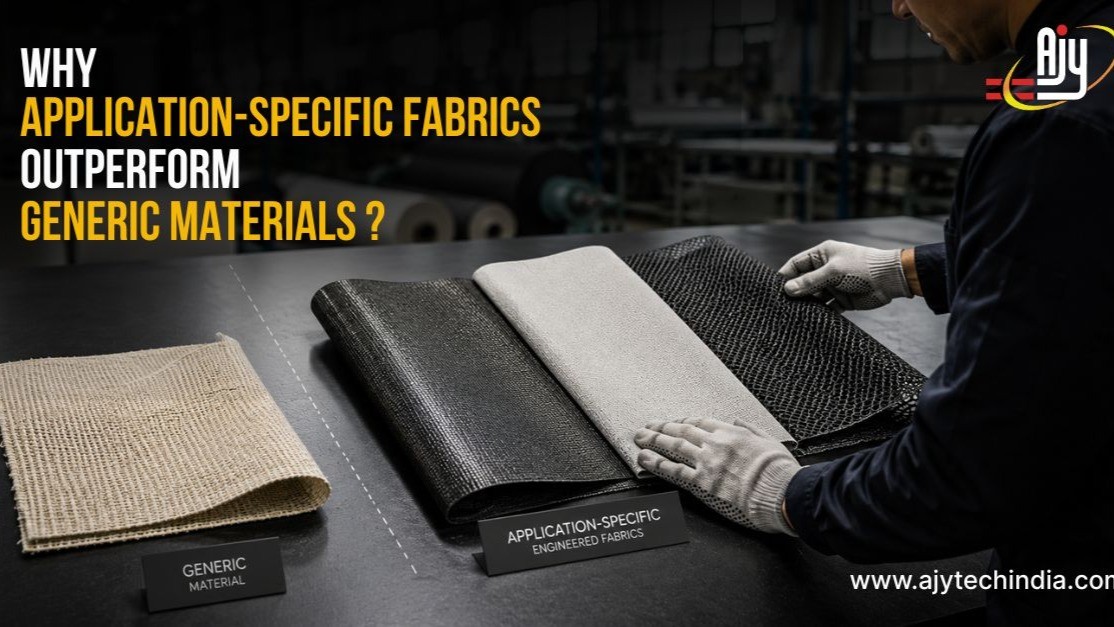
Manufacturing the same material for all kinds of applications is a lost cause now. In a competitive landscape, choosing the material for the application may seem like a technical decision on the surface, but it is a strategic one. Generic fabrics can be cost-effective, but they don’t meet the specific requirements of industries. On the contrary, application-specific fabrics deliver superior performance, durability, and reliability for their intended use. AJY Tech understands the requirements and demands of each industry and accordingly focuses on developing tailored high-performance fabrics for each application. We don’t practice a one-size-fits-all approach; rather, we believe in delivering specific functionality.
Application-specific fabrics are purpose-driven; be it filtration systems, industrial processing, protective equipment, or technical textiles, these fabrics are inherently designed to perform under precise operating conditions. During design, not only the functionality but also the properties of the resulting fabrics are carefully assessed and optimised to ensure greater efficiency. These include tensile strength, thermal resistance, chemical compatibility, airflow, abrasion resistance, and dimensional stability. Generic materials often compromise performance because they are designed for broad-spectrum use.
The right choice of fabric directly influences the efficiency of the equipment and manufacturing processes. A filtration fabric designed for a specific particle-size distribution delivers higher separation efficiency, while a heat-resistant fabric maintains structural integrity even in demanding thermal environments. Industrial environments are harsh; high temperatures, prolonged chemical exposure, moisture, and mechanical stress require materials to perform consistently throughout operations. By selecting materials engineered for the specific application, companies can improve productivity, reduce downtime, and achieve consistent performance across operations.
The fabric construction is also influenced by its end-use application and the fibre type. Application-specific high-performance fibres, advanced construction techniques, and customised finishing processes significantly improve durability. Generic materials don’t employ such a focused approach in fabric manufacturing, which then reflects in poor durability. Application-specific fabrics are manufactured using specialised fibres, resulting in longer operational life, reduced maintenance, and fewer replacements, helping businesses lower their total cost of ownership.
Contrary to generic materials, application-specific materials adhere strictly to quality, safety, and regulatory standards. This helps manufacturers maintain product quality, improve workplace safety, and meet customer and regulatory requirements with confidence. Application-specific fabrics look beyond the purchase price and consider lifecycle costs, while generic materials seem less costly in the beginning; their non-specificity costs businesses dearly.
AJY Tech combines technical expertise, material innovation, and customer collaboration to create fabrics that address your real industrial challenges. Our solutions deliver performance requirements by ensuring optimal reliability, consistency, and efficiency. Generic materials may serve basic applications, but specialised industries require specialised solutions. Our team does the same; from material selection to product development, AJY Tech works closely with customers to deliver customised fabric solutions that enhance productivity and support long-term business success.


