

Single Blog
Talking of technical textiles, the ultimate step of finishing is as important as the properties of the fibres. Technical textiles are often a combination of multiple fibres and various coatings to enhance the functionality and end-use applications. Be it industrial covers or automotive applications, and even the PPE kits used in healthcare and the industrial production segment, coated materials are prominently used. The performance of a coated fabric depends on the combination of base fabric, coating material, and lamination.

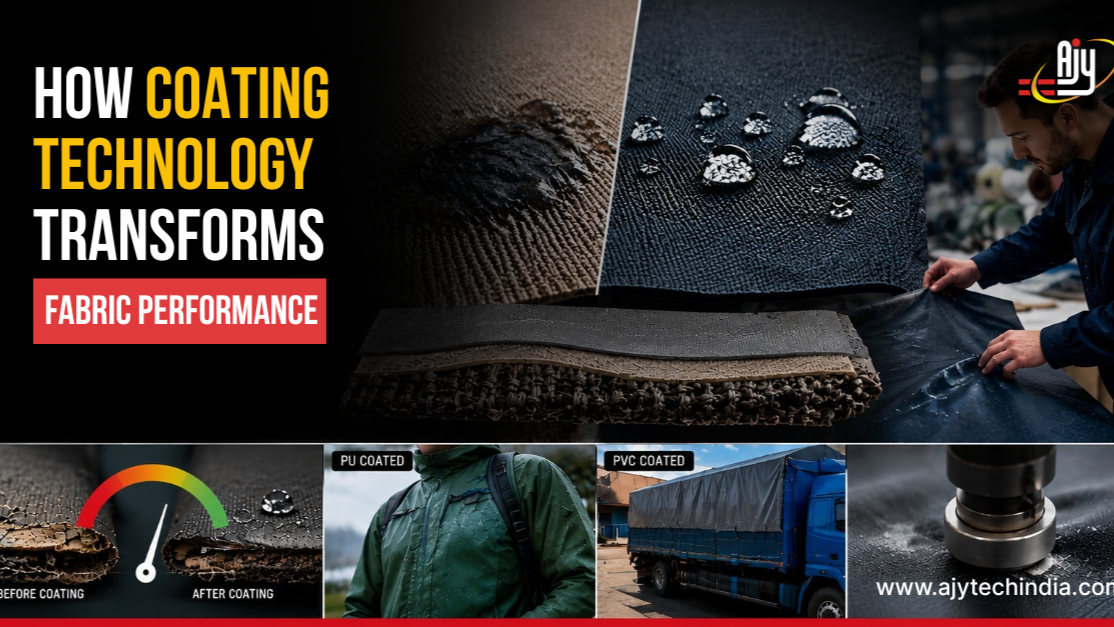
Uncoated fabrics are suitable for apparel applications, but technical textiles require fabrics for use in harsh conditions. In such application areas, coated fabrics offer advantages such as water resistance, durability, easier maintenance, and longer product life. Among coated fabrics, Polyurethane (PU) and Polyvinyl Chloride (PVC) are common technologies. However, they are often used interchangeably, though they serve very distinct purposes.
PU renders a flexible, lightweight, and premium finish. PU coating offers good abrasion resistance while equally providing good comfort and aesthetics. Backpacks, sports equipment, and outdoor apparel use PU coating. PVC coatings, on the other hand, are used for heavy-duty applications. These coatings provide waterproofing, chemical resistance, and durability for high-end technical applications. PVC coatings are ideal for tents, tarpaulins, marine and industrial applications. PU on one side is preferred for comfort, while PVC is applied for long-term outdoor protection.
PU coatings are known for their flexibility, lightweight feel, and premium finish. They offer good abrasion resistance and perform well in applications where comfort, aesthetics, and flexibility are important, such as backpacks, sports equipment, automotive interiors, and outdoor apparel.
PVC coatings are designed for heavy-duty performance. They provide excellent waterproofing, chemical resistance, and durability, making them ideal for truck covers, tents, tarpaulins, marine products, and industrial applications. PVC-coated fabrics are often selected when maximum protection and long-term outdoor performance are required.
The selection of coating affects the product’s life cycle and functionality. Abrasion resistance, moisture management, chemical resistance, and extended product life against environmental exposure are the outcomes of a good fabric and coating system. Coating decisions made early in the design stage align the production process with the outcome, reduce failure rates, and deliver value to end users.
AJY Tech views coating as a precision-engineering process that enhances durability, protection, and functionality. PU and PVC coating and lamination technologies at AJY Tech offer consumers a long-term, reliable product across various segments of technical textiles, viz., packtech, clothtech, athleisure, protech, and buildtech. We offer customised coating solutions that are supported by research, sustainable manufacturing, and quality control parameters.


