


Intro post:
While safeguarding the territories is a nation’s job, protecting those who actually stand in line is equally important. Modern warfare is driven not by the volume of ammunition but by technological advancement and on-ground application. Defense textiles have evolved more than the traditional textiles. The foundation of innovation in defense textiles lies in four major components: protection, durability, comfort, and adaptability in extreme environments.
Similar to traditional textiles, the success and adaptability of defense textiles depend on advanced fibres and innovative coating treatments. New-age synthetic fibres tailored to deliver specific properties are the most sought-after for such high-performance products. In the present times, polymers are being engineered and modified at the molecular level to render high tensile properties, abrasion resistance, impact absorption, and thermal resistance.
Aramids, Kevlar, ultra-high molecular weight polyethene (UHMWPE) are a few fibres that are extensively used in defense textiles like body armour and helmets, owing to their exceptional strength-to-weight ratio, excellent impact resistance. Glass fibres and carbon fibre are being increasingly employed in composite systems for aircraft components, protective panels, and armoured vehicles, contributing to structural strength and rigidity.
Emerging technologies such as nanotechnology and smart materials are enhancing the potential of novel textiles. Nanofibers and nano-finishes improve filtration and increase surface area, providing more comfort to the wearer. Incorporation of smart materials into defense armour enables it to detect and respond to stimuli such as temperature, pressure, or chemical exposure.
On the same lines, advancements in coating technology contribute to functional layers that increase performance and expand application areas. The most commonly used coating provides water- and oil-repellent and flame-retardant properties for personal protective equipment for defense personnel. Fluoropolymer chemistry is a popular choice for hydrophobic and oleophobic coatings, ensuring the material’s efficacy in extreme conditions. Phosphorus-based products achieve flame retardance, and IR reflective coatings are also being utilised to improve stealth capabilities in combat.
In the times of chemical and biological warfare, chemically inert and biological protective coatings are gaining significant attention. These coatings aim to neutralise or reduce the impact of hazardous agents, offering holistic protection against biological, chemical, and mechanical threats. Abrasion-resistant and anti-cut coatings take protection to another level, ensuring durability even in harsh conditions.
The global defense-oriented protective textiles market is valued at USD 247-254 billion in 2025, growing at a CAGR of 5.5-6% and projected to reach USD 320-325 billion by 2030. This includes woven, nonwoven, and knitted textiles; transport vehicles; fire-resistant gear; NBC suits; and waterproof tents. The coming decade will witness increased adoption of high-performance fibres (aramids, UHMPWE), polymer-based functional coatings (PU, PTFE), and smart textiles to cater to the evolving needs of defense textiles.Top of Form
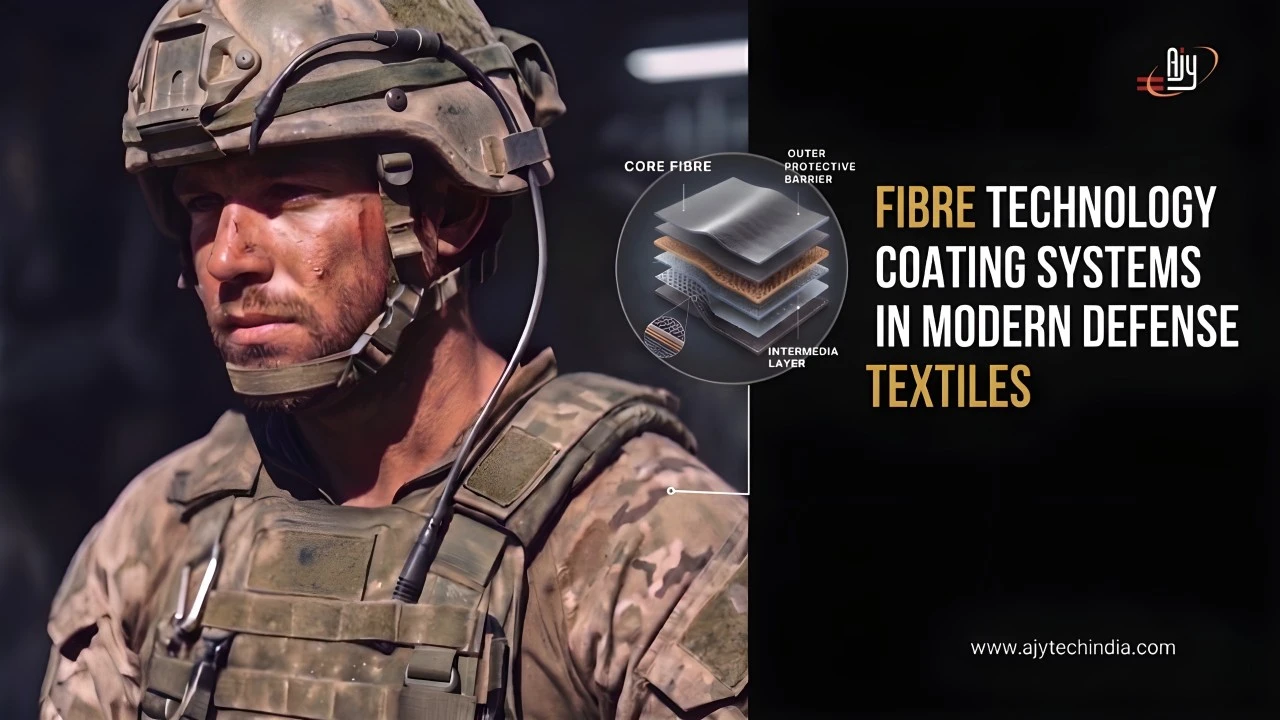
The innovation in modern defense PPE lies in the harmonious integration of fibre morphology and coating systems. Manufacturers now treat and design defense textiles as an amalgamation of fibre properties and coating systems to deliver multiple properties in parallel. Lamination, plasma treatment, and nano-coating allow manufacturers to experiment with materials and precisely control the properties of the final product. AJY Tech is a one-stop shop for high-performance materials and is committed to exploring and advancing trailblazing innovations for defense and industrial applications.


