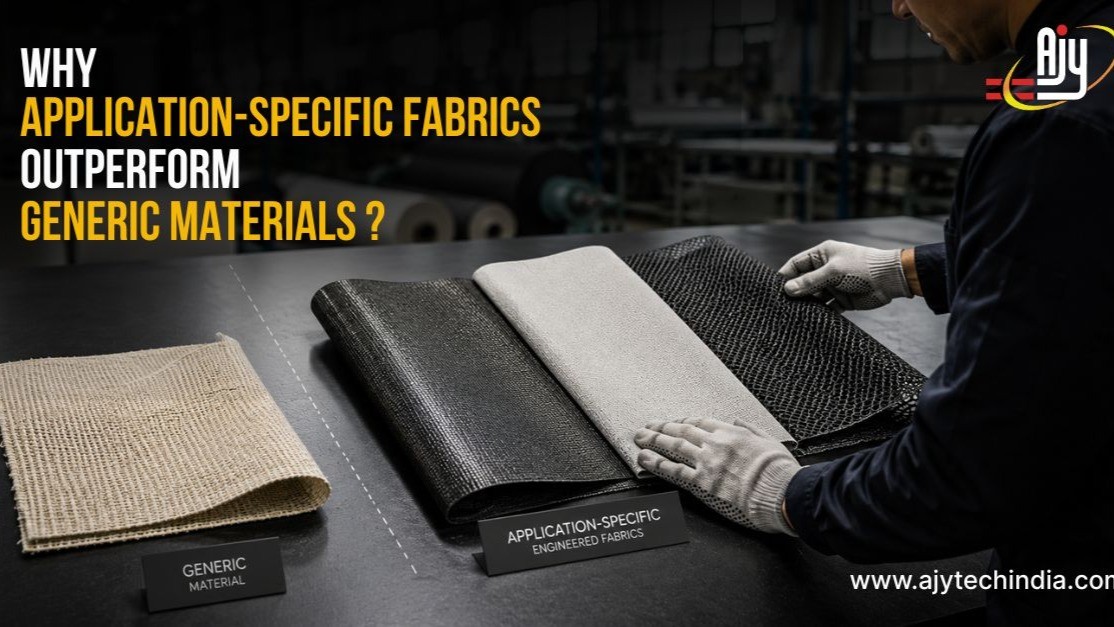

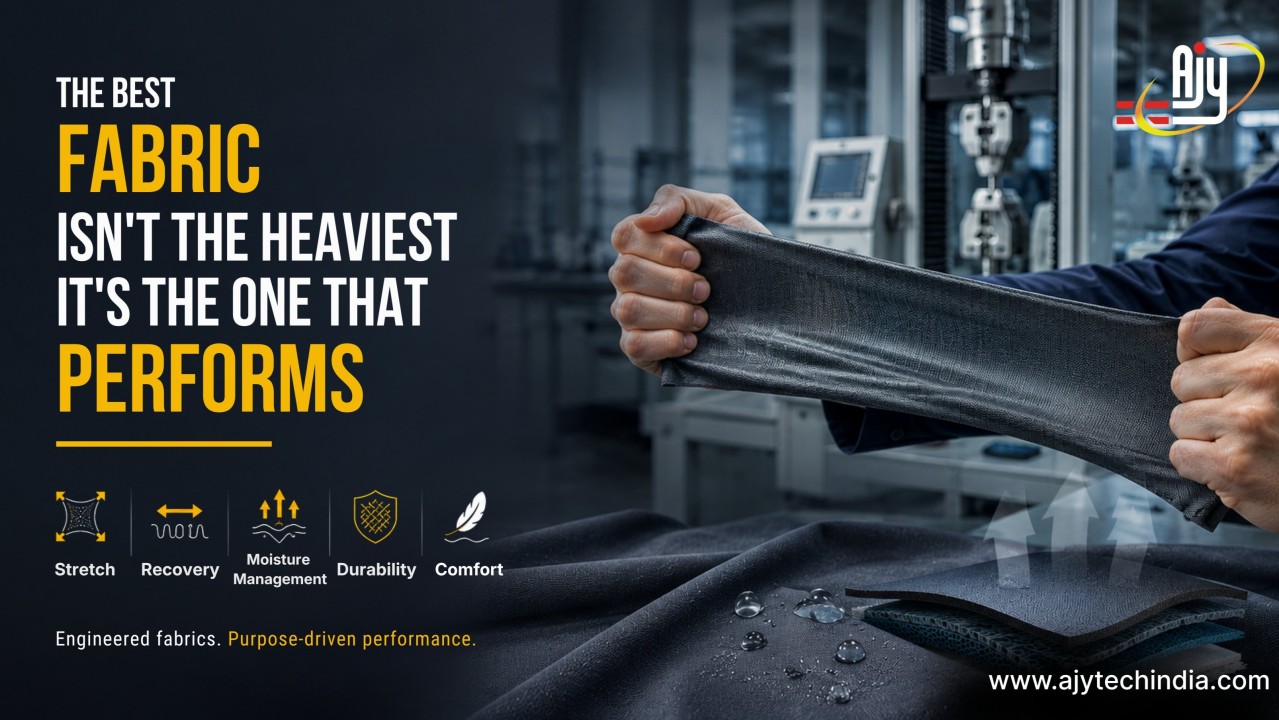
Fabric performance is often evaluated by the GSM (grams per square meter), as higher GSM often reflects better quality, greater durability, and superior performance. However, it’s partially true. Fabric performance is equally affected by weave construction, coating technology, and the intended end use.
GSM is the weight of fabric per square meter, where higher GSM means heavier fabric, not always higher strength. Similarly, flexibility and abrasion resistance are not dependent on the weight of the fabric. Two fabrics can have the same GSM, yet they perform differently because of their construction and the types of yarns used. A lighter, well-designed technical fabric may outperform a heavier alternative on the parameters of tensile strength, dimensional stability, and resistance to environmental conditions.
Weave construction is of paramount importance in determining the fabric behaviour, as the interlacing pattern of yarns affects the tear strength, stability, flexibility, and load distribution. A tightly constructed weave makes the fabric strong without adding much weight, while in the case of open weave construction, the strength is often traded off with improved airflow and improved resistance to stretching.
Coatings contribute equally to the weight as well as the fabric performance. In technical textile, the performance is majorly contributed by the coating while the weave construction forms the foundation of fabric strength. Water and moisture resistance, UV protection, chemical resistance, and fire retardancy are few application areas served by coatings. A uniformly coated medium-GSM fabric might perform better than an uncoated higher-GSM fabric.
Another crucial parameter is application area. The GSM is not an absolute criterion to adjudge a fabric as best, rather the end use of the material decides the ideal GSM. Industrial fabrics require different strength and GSM properties than the filtration fabrics. In some cases, higher GSM might become disadvantage by reducing flexibility and increasing installation complexity. Therefore, the GSM standalone can’t be used as a parameter to ascertain fabric performance, rather the right approach would be weighing the strength, functionality, durability, and efficiency for the application.
Buyers also get carried away with the GSM during their purchase decisions, which ends up as a big mistake when considering long-term performance. Buyers should always asses the complete specification like yarn quality, weave, coating, mechanical strength, environmental resistance beyond GSM to make an informed and right decision.
GSM might be one of the metrics to make purchase decision, but it shouldn’t be the sole reason for the purchase decision. The fabric performance is the optimum combination of material construction, coating technology and application-based design. At AJY Tech, we assist the customers in making an informed choice based on performance parameters. AJY Tech customizes the technical textiles fabric for the required applications helping businesses achieve better durability, greater efficiency, and long-term value from their investment.