

Single Blog
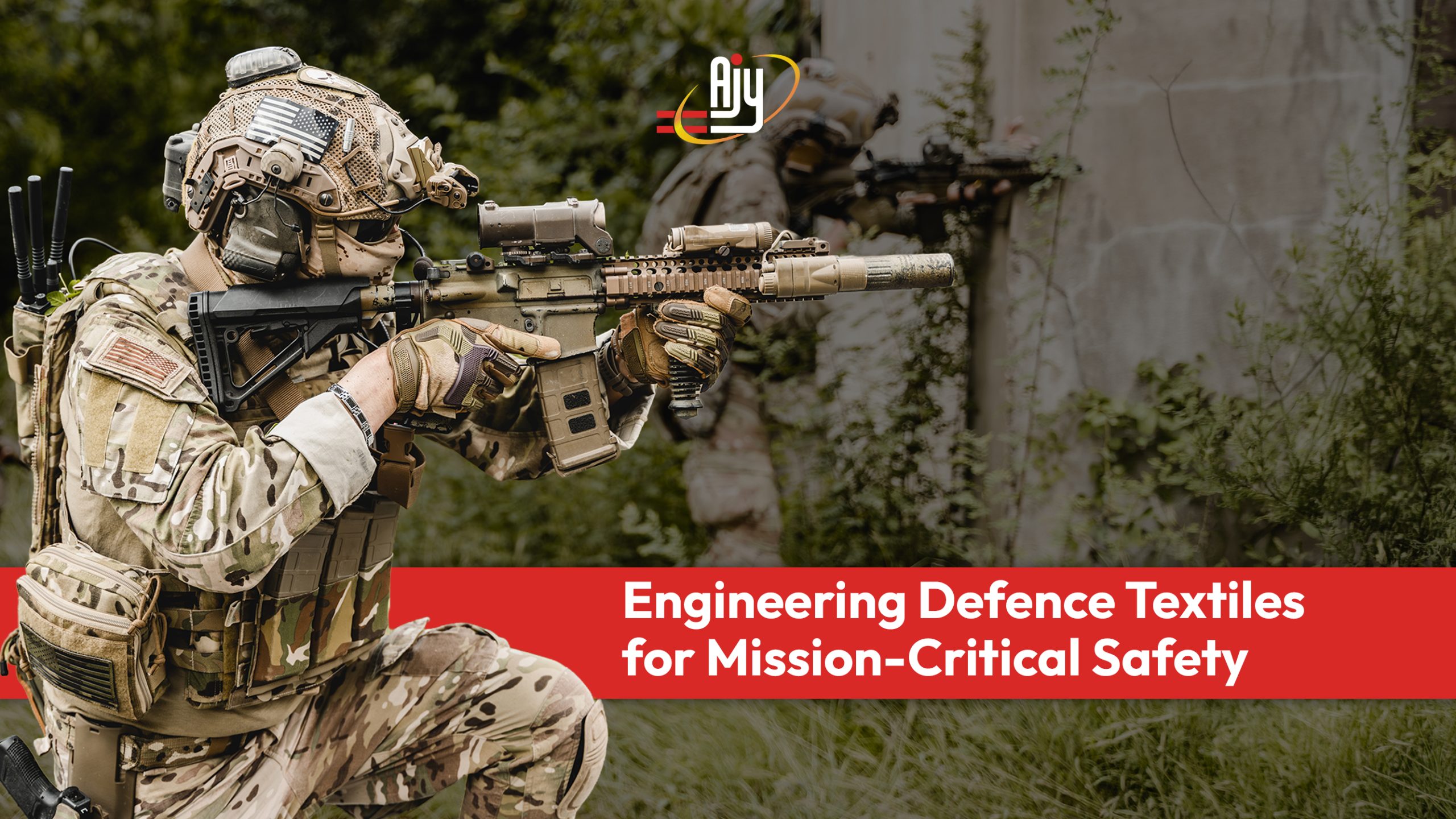
Textiles have an important role in protecting human life in circumstances where safety cannot be compromised, such as defence operations, firefighting, and hazardous industrial tasks. Defence textiles, unlike ordinary fabrics, are designed with advanced material science and stringent performance criteria to defend against heat, impact, chemicals, and other extreme dangers. AJY Tech India’s ProTech range demonstrates how engineered textiles provide mission-critical safety while also providing measurable performance improvements.
Explore AJY Tech’s advanced protective fabrics here: https://www.ajytechindia.com/portfolio/protect/
What Defines Technical Defence Textiles?
Defence and protective fabrics are designed to achieve specific practical goals, such as flame resistance, ballistic impact reduction, and chemical barrier performance, rather than purely attractive or comfortable attributes. Research on protective textiles shows that multilayer, high-strength fibre architectures outperform standard woven fabrics in terms of extreme stress resistance. For example, innovative woven fabric structures and fibre composites are key to modern body armour design, allowing for significant amounts of energy absorption while maintaining mobility.
AJY Tech’s ProTech solutions follow similar performance principles, combining optimal fibre options with enhanced coatings and finishes to meet real-world safety criteria.
Key Performance Characteristics
1.Flame and Heat Resistance
Engineered flame-resistant fabrics for protective clothing combine high-temperature-stable fibres with customised finishes to delay ignition, limit flame spread, and maintain material integrity under thermal stress. Research shows that incorporating phosphorus-based flame retardants into high-performance fibres can reduce peak heat release rates by up to 60%, indicating better safety performance.
2.Ballistic and Impact Protection
Ballistic protection is based on high-strength fibres such as ultra-high-molecular-weight polyethylene (UHMWPE) and para-aramids, which have excellent strength-to-weight ratios and energy absorption. According to studies, UHMWPE fibres can provide roughly 25% higher ballistic performance at equal areal densities than aramid fibres, making them valuable in body armour and vehicle protective systems.
3.Barrier and Chemical Resistance
Textiles in hazardous areas must act as reliable chemical barriers. Advanced coatings and laminates improve corrosive resistance without losing flexibility or comfort, allowing wearers to move more freely throughout operations.
Research-Driven Development at AJY Tech
At AJY Tech India, R&D drives product innovation. The company’s dedicated R&D facilities are focused on innovative material development, coating and laminating methods, and performance testing to ensure that each fabric fulfils stringent tensile strength, heat resistance, chemical performance, and durability standards.
Discover how AJY Tech’s R&D shapes next-generation protective textiles: https://www.ajytechindia.com/facilities/#research
Customisation for Mission Needs
No two mission environments are identical. AJY Tech’s technical strategy comprises tailored fabric composition, specialist coatings, and client-collaborative testing to guarantee textiles satisfy specific performance and certification standards. This adaptability is critical for defence contracts, firefighting operations, and industrial safety devices.
Bridging Performance and Practicality
Effective defensive materials combine protection and wearer comfort. Breathability, flexibility, and ergonomic design guarantee that workers can work successfully without becoming fatigued, an important concern backed by human factors research in protective equipment. While hard protective components provide necessary shielding, designed textiles serve as an important link between performance and everyday usability.


